

If you work in an American company, there’s a good chance you’ve seen this word everywhere: ASAP.
You’ll find it in emails.
In Slack messages.
In meeting notes.
In project updates.
For many non-native English speakers, this small word can create a lot of pressure.
Does it mean right now?
Does it mean stop everything and do this immediately?
Are you already late if someone writes it?
The truth is much simpler — and much less stressful.
In American workplace communication, ASAP usually just means a task has priority, not that it must be completed instantly.
Let’s break down what ASAP really means in Business English, when professionals use it, and how you should respond when you see it.
What Does ASAP Mean?
ASAP stands for “As Soon As Possible.”
It’s one of the most common abbreviations in American business communication.
People use it when something should be done quickly, but there isn’t a specific deadline written in the message.
For example, instead of writing:
“Please send this quickly.”
Someone might write:
“Please send this ASAP.”
The meaning is the same, but the abbreviation is shorter and more efficient.
In fast-moving workplaces, this kind of shorthand communication is very common.
Why Americans Use ASAP So Often
American work culture tends to value communication that is:
-
Direct
-
Efficient
-
Concise
Instead of writing long explanations, professionals often rely on short signals that everyone understands.
Words like:
-
ASAP
-
FYI (For Your Information)
-
EOD (End of Day)
are part of everyday workplace vocabulary.
ASAP works well because it immediately communicates priority without requiring a long explanation.
Common Situations Where You’ll See ASAP
Most of the time, ASAP appears when someone is making a request.
Here are some typical workplace examples.
Requesting a Report
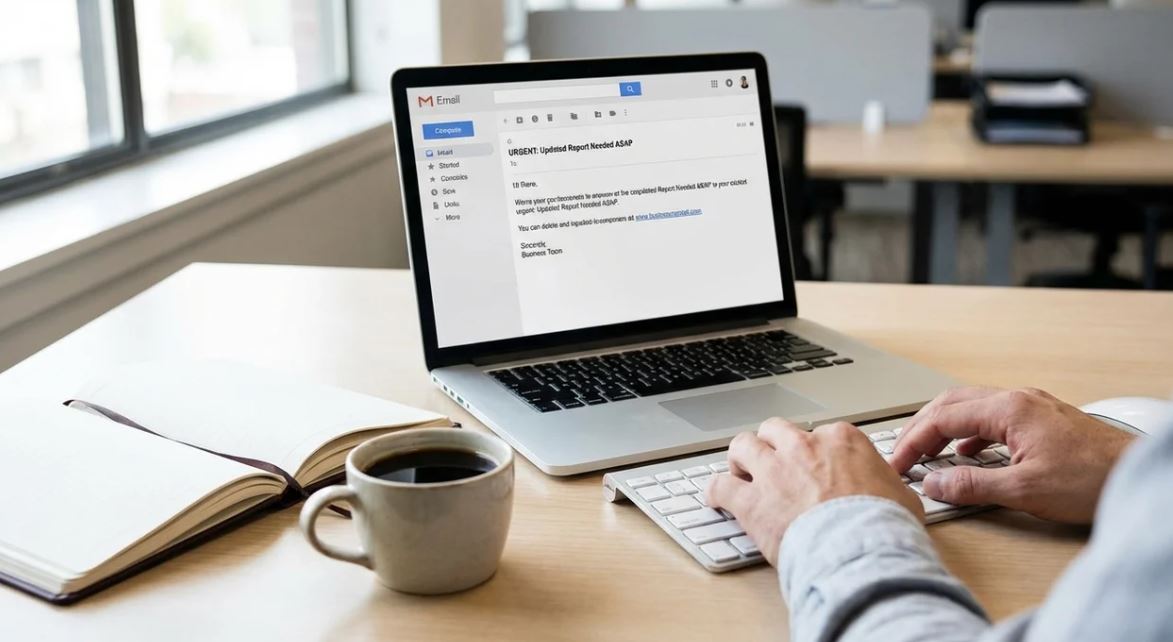
“Could you send the updated report ASAP?”
This simply means the report is needed soon.

Asking for a Review
“Can you review this document ASAP?”
In this situation, the person wants feedback quickly so the work can continue.
Preparing for a Meeting
Sometimes managers use ASAP when they need information for an upcoming meeting.
Example:
“I need the latest numbers ASAP for tomorrow’s meeting.”
Here, the urgency comes from the meeting schedule.
Client Communication
Clients also use ASAP when they need confirmation or updates.
Example:
“Please confirm the delivery date ASAP.”
Again, the message is clear: the request should be handled soon.
Does ASAP Always Mean “Right Now”?
This is where many non-native professionals misunderstand the phrase.
ASAP does not always mean immediately.
Often it simply means:
“Please handle this as soon as you reasonably can.”
The real urgency usually comes from context, not the word itself.
For example:
“I need this ASAP — the client meeting starts in 30 minutes.”
Now the message is clearly urgent.
Another example:
“Please send the contract ASAP so we can finalize the deal today.”
Here, the urgency comes from the deal timeline.
So when you see ASAP, look at the situation around the request.
That will tell you how quickly it needs to be done.
Can You Use ASAP in Your Own Emails?
Yes — but it’s best to use it carefully.
ASAP is appropriate when something genuinely requires quick attention.
For example:
“Could you send the invoice ASAP?”
or
“Please approve this ASAP so we can move forward.”
Both examples sound natural in Business English.
However, professionals try not to overuse this word.
If every task is marked ASAP, the word loses its meaning.
Good managers use it selectively to signal true priority.
How to Respond When Someone Says ASAP
When someone sends you a request with ASAP, the most professional response is not just “OK.”
Instead, provide a clear timeline.
This shows reliability and professionalism.
For example:
“I’m working on it now. I’ll send it within the hour.”
or
“Got it — I’ll have it ready this afternoon.”
These responses communicate two important things:
-
You received the request.
-
You are taking responsibility for the timeline.
This builds trust in professional communication.
A Cultural Tip About Urgency
One thing many international professionals notice is that Americans often communicate urgency indirectly.
Instead of writing:
“This must be finished immediately.”
They may simply write:
“Can you send this ASAP?”
The tone remains polite and cooperative, even when something is important.
Understanding these subtle communication styles is an important part of developing professional fluency in English.
The Big Takeaway
Let’s summarize the key idea.
ASAP = As Soon As Possible.
It usually means:
-
The task is a priority
-
The exact timing depends on context
-
The person wants it handled soon
But it does not automatically mean immediate action.
Learning how to interpret and respond to words like ASAP is part of understanding real Business English communication.
Want to Sound More Natural in American Business English?
Understanding phrases like “ASAP” isn’t just about vocabulary — it’s about tone, timing, and cultural awareness.
If you want structured practice with real workplace scenarios, the ChatterFox Business English Course is designed specifically for non-native professionals working in U.S. environments.
The course includes:
-
Real American workplace phrases and how to use them naturally
-
Email and meeting communication practice
-
Tone correction and clarity training
-
AI speech recognition technology
-
Coaching support from certified accent and communication coaches
It’s built to help you speak clearly, confidently, and professionally — not just grammatically correctly.
Final Thoughts
Small words often carry big meaning in professional communication.
Understanding phrases like ASAP helps you read workplace messages more accurately and respond with confidence.
If this phrase has ever made you feel nervous, that’s completely normal.
But now you know what it really means — and how professionals use it every day in American workplaces.
And once you understand the tone behind these expressions, workplace communication becomes much clearer and much less stressful.