

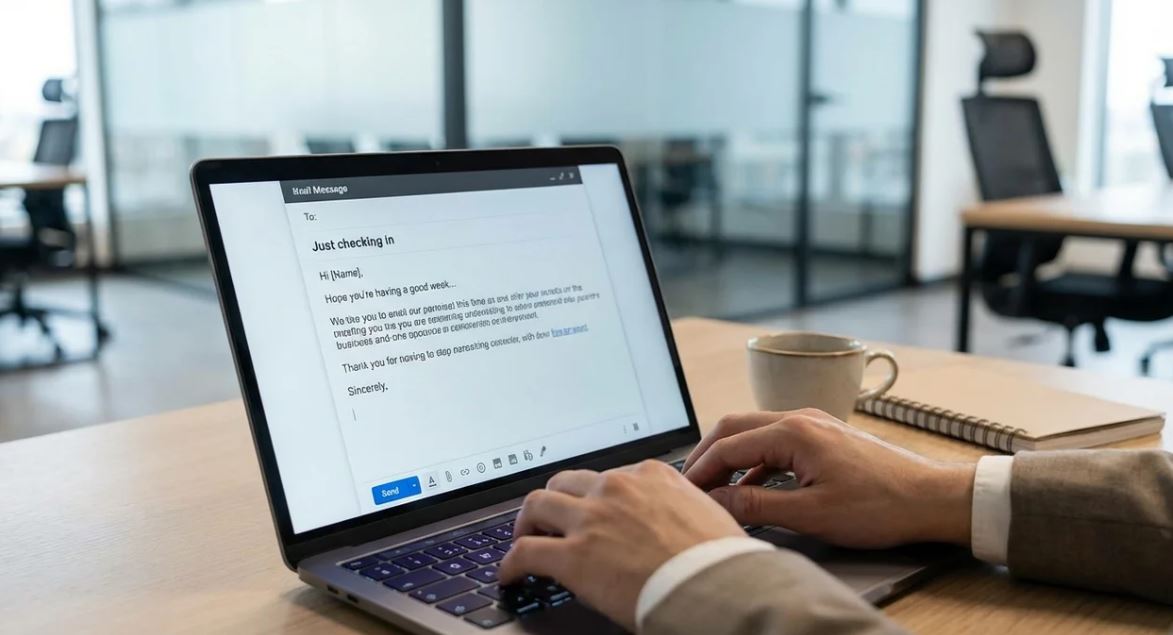
If you work in the United States, there’s one short message you’re going to see again and again: “Just checking in.”
And if you’re a non-native English speaker, this phrase can feel surprisingly stressful.
Is something wrong?
Are they annoyed?
Did I miss a deadline?
Am I in trouble?
Take a breath.
In most American workplaces, “just checking in” simply means: “Do you have any updates?”
That’s it.
It’s not anger.
It’s not pressure.
It’s not passive-aggressive.
It’s standard, polite follow-up language.
Let’s break down what this phrase really means, when Americans use it, and how you can use it confidently in your own professional communication.
What Does “Just Checking In” Mean?
In American business culture, communication is often direct in purpose but soft in tone.
Instead of saying:
“Why haven’t you responded?”
—which sounds sharp or confrontational—
Americans will say:
“Just checking in.”
The purpose is the same: they want an update.
But the tone is different.
“Just checking in” softens the message. It removes accusation. It keeps the interaction neutral and professional.
In other words, it protects the relationship.
And in U.S. work culture, maintaining smooth professional relationships is extremely important.
Why This Phrase Feels Stressful for Non-Native Professionals
If your first language is more direct, you might interpret short messages as emotionally loaded.
For example, you might read:
“Hi Sarah, just checking in.”
And your brain fills in the blanks:
-
“She’s annoyed.”
-
“I’m late.”
-
“I did something wrong.”
But in American English, short doesn’t mean angry.
In fact, short often means efficient.
Americans value:
-
Clear communication
-
Quick follow-ups
-
Keeping projects moving
So this phrase is usually just a gentle nudge, not criticism.
When Do People Use “Just Checking In”?
Let’s look at the three most common workplace situations where this phrase appears.
1. When Someone Hasn’t Replied to an Email
This is probably the most common use.
Example:
“Hi Mark, just checking in on this.”
It simply means:
“I’m following up because I haven’t heard back.”
No drama. No hidden message.
2. When They’re Waiting for a Task
If a deadline is approaching or a deliverable is expected, someone might write:
“Just checking in — is the draft ready?”
Notice the tone. It’s neutral and practical.
They’re not saying:
-
“You’re late.”
-
“This is unacceptable.”
-
“Why isn’t this done?”
They’re just asking for status.
3. To Keep a Project Moving
Sometimes it’s not about delay at all. It’s about momentum.
Example:
“Just checking in to see where we are on this.”
This is common in fast-paced workplaces where progress updates matter.
It doesn’t mean someone failed. It means the project is active.
What Makes This Phrase Professional?
Let’s analyze why “just checking in” works so well in Business English.
It’s:
✅ Short
✅ Neutral
✅ Calm
✅ Non-accusatory
✅ Emotionally safe
There’s no blame language. No pressure words. No emotional intensity.
That’s why it’s so common.
In American workplace communication, tone matters as much as content.
Can You Use “Just Checking In”?
Yes — and you absolutely should.
Using this phrase correctly makes you sound:
-
Professional
-
Culturally fluent
-
Calm
-
Collaborative
Here are some examples you can use.
Polite Follow-Up After a Meeting
“Hi Anna, just checking in on the proposal we discussed.”
This sounds proactive, not pushy.
When Waiting on Feedback
“Just checking in — let me know if you need anything from me.”
That second sentence is powerful.
It shifts the tone from:
“Why haven’t you done this?”
To:
“I’m here to help.”
That’s strong professional communication.
Following Up on a Deliverable
“Hi David, just checking in to see if there are any updates on the report.”
Notice how calm that sounds.
It’s not demanding. It’s responsible.
Timing Matters: When NOT to Use It
Here’s an important cultural detail.
Don’t send “just checking in” five minutes after your original email. ????
In American work culture, people expect some space before follow-ups.
A general guideline:
-
Internal team communication: 1–2 business days
-
External clients: 2–3 business days
Of course, urgency changes this. But in normal situations, patience is professional.
Sending follow-ups too quickly can feel anxious or pressuring.
Sending them too late can slow progress.
Finding that balance is part of professional fluency.
How to Respond When Someone Says “Just Checking In”
Now let’s flip it.
If you receive this message, how should you reply?
Keep it simple and direct.
If You Have an Update
“Thanks for checking in. The draft will be ready by tomorrow afternoon.”
Clear. Calm. Confident.
If You’re Delayed
“Thanks for checking in. I’m running slightly behind but will send it by Thursday.”
Notice the structure:
-
Acknowledge
-
Brief explanation
-
New timeline
No long apologies. No emotional language.
Just clarity.
If You Need More Time
“Thanks for checking in. I’m still reviewing the data — I’ll update you by Friday.”
Again — simple and professional.

Cultural Insight: Why Americans Prefer Soft Follow-Ups
American business communication tends to avoid confrontation in early stages.
Instead of escalating immediately, professionals:
-
Nudge
-
Follow up
-
Clarify
-
Confirm
“Just checking in” is a tool for keeping things moving without creating tension.
It’s a social lubricant.
And once you understand that, the phrase stops feeling scary.
Common Mistakes to Avoid
Here are a few things non-native professionals sometimes do:
❌ Adding Emotion
“Just checking in because I haven’t heard from you and I’m worried.”
Too much.
Keep it neutral.
❌ Over-Explaining
Long follow-up paragraphs can feel defensive.
Short and clear is stronger.
❌ Using It Too Frequently
Multiple “just checking in” emails in one day feels anxious.
Professional communication is calm.
The Big Recap
Let’s simplify everything.
“Just checking in” means:
-
“Any updates?”
-
“Following up.”
-
“Where are we on this?”
It does NOT mean:
-
“I’m angry.”
-
“You failed.”
-
“This is unacceptable.”
It’s standard American workplace language.
Once you understand that, you stop reading emotional meaning into it.
And that’s an important step in professional fluency.
Want to Sound More Natural in American Business English?
Understanding phrases like “just checking in” isn’t just about vocabulary — it’s about tone, timing, and cultural awareness.
If you want structured practice with real workplace scenarios, the ChatterFox Business English Course is designed specifically for non-native professionals working in U.S. environments.
The course includes:
-
Real American workplace phrases and how to use them naturally
-
Email and meeting communication practice
-
Tone correction and clarity training
-
AI speech recognition technology
-
Coaching support from certified accent and communication coaches
It’s built to help you speak clearly, confidently, and professionally — not just grammatically correctly.

Final Thoughts
If this phrase has ever made you nervous, nothing is wrong with you.
Cultural communication differences are real.
But now you understand the purpose and tone behind “just checking in.”
You can:
-
Recognize it calmly
-
Respond confidently
-
Use it professionally
And that’s how you grow in Business English — not just learning vocabulary, but understanding how tone works in real American workplaces.
Clear. Calm. Professional.
That’s the goal.